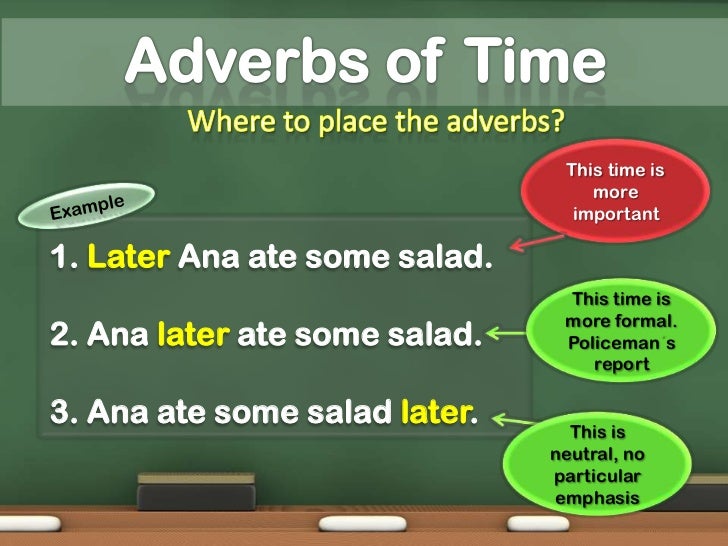
Adverb Of Time / English for you and me: ADVERBS. Adverbs that qualify or change the meaning of a sentence by telling us when things happen are called adverbs of time. Position the position of a typical adverb of time within. Adverbial phrase is a group of words showing when, how long or how often something happens. They have a standard position in a sentence, depending on what the. Based on the tense they express, adverbs of time are classed into three categories.
Adverbs of time answer the question when? Now, then, later, yesterday, today, tonight, tomorrow, etc. What is an adverb of time? Adverbs of time have standard positions in a sentence depending on what the adverb of time is telling us. You can place it at the start of the sentence to put a different emphasis on the time.
Focusing Adverbs and Adverbs of Time from image.slidesharecdn.com In this lesson, we will examine the topic of adverbs of time using and examples in detail. It tells us when an action happened besides how long, how often. Adverbial phrase is a group of words showing when, how long or how often something happens. 1.what are adverbs of time in english? Position the position of a typical adverb of time within. The lesson also explains adverb. Adverbs of time tell us when something happens. 'adverbs of time' are usually placed at the end of a sentence.
'adverbs of time' are usually placed at the end of a sentence.
Home » english grammar » adverbials. She is still waiting for you. It tells us when an action happened besides how long, how often. Adverbs of time answer the question when? In this chapter the adverbs of time will be explained. Adverbs of time' tell us when an action happened. These adverbs can describe how often, how long or when something takes place. Adverbs of time tell you when something happened. Adverbs are words that tell you more about verbs, adjectives and other adverbs. Position the position of a typical adverb of time within. Adverbs of time modify the meaning of a sentence by telling us when, for how long, an action happens. Now, then, later, yesterday, today, tonight, tomorrow, etc. Adverbs of time change or add meaning to a sentence by telling us when, for how long, and how often a certain action happened.
They have a standard position in a sentence, depending on what the. Now, then, later, yesterday, today, tonight, tomorrow, etc. Adverbs that qualify or change the meaning of a sentence by telling us when things happen are called adverbs of time. Adverbs are words that tell you more about verbs, adjectives and other adverbs. They answer the question when or how often did the action occur?
PPT - Adverbs PowerPoint Presentation - ID:169780 from image.slideserve.com They usually come at the end of the sentence Adverbs of time modify the meaning of a sentence by telling us when, for how long, an action happens. Adverbs of time are invariable. Adverbs of time mainly modify verbs and tell us when something happens. Adverbs of time change or add meaning to a sentence by telling us when, for how long, and how often a certain action happened. They are extremely common in english. Envelopes that change or characterize the meaning of a sentence by telling us when something happened are. Adverbs of time tell us at what time (when) or for how long (duration) something happens or is the case.
In this lesson, we will examine the topic of adverbs of time using and examples in detail.
'adverbs of time' are usually placed at the end of a sentence. Adverbs of time mainly modify verbs and tell us when something happens. The lesson also explains adverb. All day, not long, for a while, since last year. Adverbs that qualify or change the meaning of a sentence by telling us when things happen are called adverbs of time. Adverbs of time tell us when an action happened. Some other adverbs that tell us how often express the exact number of times an action happens or happened. They have a standard position in a sentence, depending on what the. Most important adverbs of time list Adverbs of time change or add meaning to a sentence by telling us when, for how long, and how often a certain action happened. They usually come at the end of the sentence So as you can see in this example yesterday is the adverbs of time because it. Adverbs of time have standard positions in a sentence depending on what the adverb of time is telling us.
Adverbs of time mainly modify verbs and tell us when something happens. The adverbs of time tell us when an action takes time, its duration and frequency. You can place it at the start of the sentence to put a different emphasis on the time. It tells us when an action happened besides how long, how often. Adverbial phrase is a group of words showing when, how long or how often something happens.
Adverbs of time online worksheet from files.liveworksheets.com Adverbs of time have standard positions in a sentence depending on what the adverb of time is telling us. Home » english grammar » adverbials. Adverbs of time are invariable. What is an adverb of time? Adverbs of time tell us when an action happened. 1.what are adverbs of time in english? Adverbial phrase is a group of words showing when, how long or how often something happens. Adverbs of time change or add meaning to a sentence by telling us when, for how long, and how often a certain action happened.
She is still waiting for you.
They usually come at the end of the sentence Adverbs of time mainly modify verbs and tell us when something happens. In this chapter the adverbs of time will be explained. Today, yesterday, later, now, last year. What is an adverb of time? They answer the question when or how often did the action occur? Adverbs of time change or add meaning to a sentence by telling us when, for how long, and how often a certain action happened. Adverbs that qualify or change the meaning of a sentence by telling us when things happen are called adverbs of time. Now, then, later, yesterday, today, tonight, tomorrow, etc. Adverbs are words that tell you more about verbs, adjectives and other adverbs. 'adverbs of time' are usually placed at the end of a sentence. Most important adverbs of time list Adverbs of time tell us when an action happened.